
Product guidance
Building Resilient WhatsApp Profile Enrichment: Why Static Image Links Fail
Learn why static image links fail and discover WhatsApp profile picture enrichment best practices using real-time, synchronous API verification for CRM data.
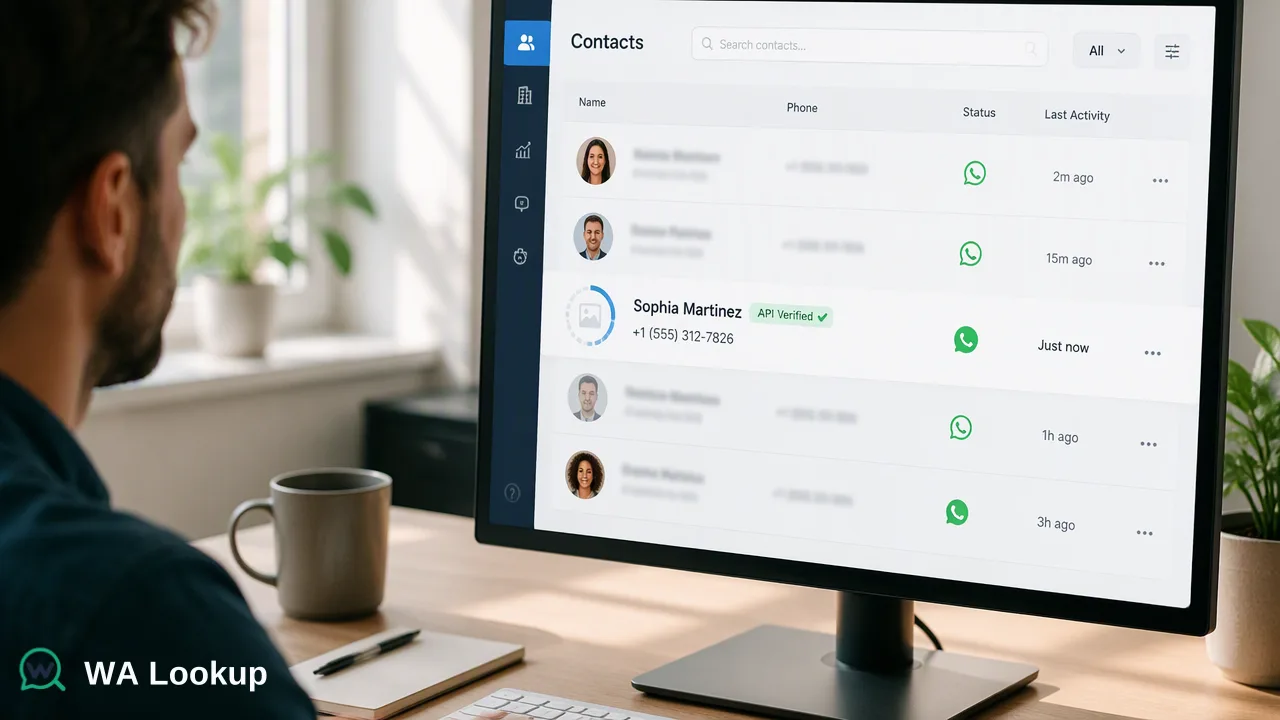
Discover why caching volatile WhatsApp profile pictures leads to broken CRM data, and learn how to implement a resilient, real-time synchronization strategy using synchronous API checks.
WhatsApp profile pictures are volatile, non-permanent assets that frequently change or expire. Storing these as static links in a CRM leads to broken UI elements and stale data. To maintain integrity, organizations should replace static storage with a resilient, programmatic synchronization strategy that performs real-time, synchronous API checks to retrieve current account signals at the moment of need.
The Volatility of WhatsApp Profile Assets
WhatsApp profile pictures are dynamic assets tied to user preferences and platform infrastructure. They are not permanent file paths designed for long-term external storage. When organizations attempt to capture and store these URLs as static database links, they inevitably encounter broken UI elements and missing images. This breakage occurs because the underlying URLs expire, change during platform updates, or become invalid when a user modifies their privacy settings or updates their avatar. Furthermore, the availability of a profile picture is not a static state. A user may have an avatar visible one day and remove it the next. In the WA Lookup API, this is reflected when the avatar_url returns as an empty string. Relying on a previously cached link fails to capture these real-time modifications. It is also important to note that the absence of a profile picture (avatar=false) does not determine the overall registration status of the number. Because these assets are inherently temporary, treating them as permanent database fields creates ongoing technical debt and requires constant manual intervention to clean up broken links.
The Risks of Static Storage in CRM Workflows
Relying on static storage for volatile profile assets introduces significant risks to CRM health and operational efficiency. When support and sales teams access a CRM record, broken UI elements degrade the user experience, creating friction during customer interactions. A missing or broken image link is often the first indicator of stale data, which can point to broader inaccuracies within the contact record. Stale data directly impacts lead qualification and routing workflows. If a CRM relies on a cached snapshot, it misses critical updates about the account's current state. For example, an account might transition from a standard personal number to a business account. A static image link provides no insight into this change, whereas a real-time check using the ws_business service type would reveal the updated business profile signal. Operating on outdated information means teams lack the accurate context needed for their communication workflows.
Moving to a Resilient Synchronization Strategy
To eliminate the risks associated with stale data and broken links, organizations must transition to a resilient synchronization strategy. This approach discards the "store and forget" model in favor of an API-first architecture that retrieves the most current account-presence signal exactly when it is needed. Real-time verification ensures data accuracy at the point of interaction, providing teams with reliable workflow inputs. A robust synchronization pipeline leverages synchronous API checks rather than complex asynchronous architectures. With the WA Lookup API, results are synchronous: they are returned in the same HTTP response as the request. This eliminates the need for asynchronous task-submission, polling, callback, or download workflows, which add unnecessary latency and complexity to CRM integrations. Organizations can monitor the health and usage of this synchronization strategy through the WA Lookup web dashboard. The dashboard provides comprehensive support for API key management, balance tracking, check history, product-level reporting, recent checks, balance spend, and 7-day trends. By utilizing a pay-per-check model where failed or undetermined checks are refunded automatically, teams can efficiently maintain CRM data integrity without paying for ambiguous results.
Implementing Real-Time Verification
Implementing real-time WhatsApp profile picture enrichment best practices requires a clear understanding of the API contract. The WA Lookup API provides a streamlined request flow for retrieving current account signals. All submitted phone numbers must be formatted in E.164 format to ensure consistent processing. The documented request contract utilizes the POST /api/v1/check endpoint. Requests must include the X-API-Key and Content-Type: application/json headers. The JSON payload requires two fields: {"service_type": "<ws|ws_avatar|ws_business>", "identifier": "<E.164 number>"}. For profile enrichment, the ws_avatar service type is used. The outer response envelope for a completed check consists of code, msg, and data. The public data object for ws_avatar contains service_type, identifier, registered, avatar, and avatar_url. Because the endpoint is synchronous, the CRM receives these fields immediately. If a check cannot be decided, the API returns a non-zero business code and no completed result object, preventing the system from storing ambiguous data. For bulk operations, a synchronous batch endpoint accepts up to 100 identifiers in one request and returns the whole batch or fails as a whole. Additionally, organizations utilizing AI assistants can integrate these same real-time, synchronous checks via the official MCP Server at the /mcp path over Streamable HTTP / JSON-RPC, using their existing API key to query single numbers or small batches directly within their AI workflows.
FAQ
Why do stored WhatsApp profile links stop working?
WhatsApp profile picture URLs are dynamic and temporary. They expire or change due to platform updates, user privacy modifications, or avatar updates. Storing them as static database links inevitably results in broken UI elements when the underlying asset is modified or removed.
How can organizations ensure CRM data remains current without manual updates?
Organizations can maintain accurate records by implementing a programmatic synchronization strategy. By integrating a synchronous REST API to perform real-time checks, systems can retrieve the current platform-registration signal and avatar availability at the moment a record is accessed, ensuring the CRM reflects the most recent data.
Is it better to cache profile pictures or check them in real-time?
Checking profile assets in real-time is the recommended best practice. Caching volatile URLs leads to stale data and broken links. A real-time, synchronous API check retrieves the current avatar URL and registration status in a single HTTP response, providing accurate workflow inputs without the technical debt of maintaining a static cache.
What is the required format for submitting phone numbers for profile enrichment?
Phone numbers must be submitted in E.164 format. This standardized format ensures consistent API requests when querying the single-number endpoint or the synchronous batch endpoint, which accepts up to 100 identifiers per request.
How does a synchronous API check handle undetermined results?
If a check cannot be decided, the WA Lookup API returns a non-zero business code rather than a completed result object. This ensures that CRM systems do not process or display ambiguous data, and the system automatically refunds the account balance for failed or undetermined checks.