
Product guidance
Transforming WhatsApp Conversations into Structured CRM Data: A Technical Guide
Discover how to convert WhatsApp interactions into structured CRM data and improve record hygiene using real-time account registration signals.
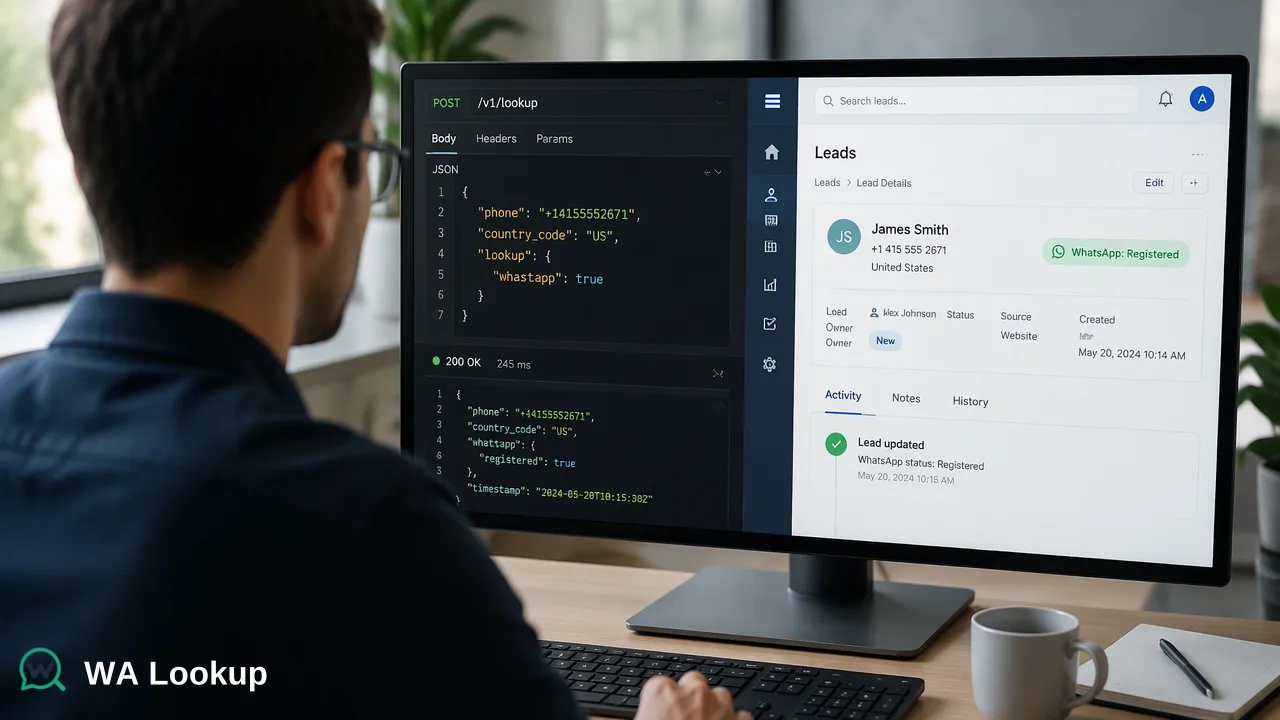
Learn how organizations can bridge the gap between unstructured WhatsApp conversations and structured CRM systems, using platform registration signals to maintain high data hygiene.
Transforming WhatsApp interactions into structured CRM records requires moving away from treating chat threads as ephemeral message-passing and establishing workflows that capture discrete business facts. While messaging applications store raw text chronologically, enterprise systems depend on structured attributes such as confirmed contact identifiers, documented project requirements, and operational decisions. Incorporating platform-registration signals alongside structured data extraction helps teams verify that associated phone numbers represent reachable accounts, supporting pipeline hygiene and reliable operational workflows.
The Challenge of Ephemeral Messaging in CRM
Conversational messaging has become a primary channel for commercial interaction, yet messaging platforms are architected to store chronological message streams rather than durable business memory. When teams conduct negotiations, provide technical specifications, or agree on contract revisions inside direct messaging threads, those critical business facts remain trapped in unstructured text blocks. This separation creates significant operational vulnerabilities. When an employee departs an organization or an endpoint device is upgraded, chat histories stored locally or in decentralized application backups can become inaccessible. If the underlying data points—such as requested volumes, agreed pricing parameters, or secondary points of contact—are not captured into a centralized database, institutional continuity is disrupted. Transforming these threads into structured records is necessary to make conversational interactions queryable, auditable, and accessible across the broader revenue and support operations.
Shifting from Message-Passing to Data Extraction
Building an effective workflow for whatsapp data extraction for crm operations requires a fundamental shift: viewing messaging not merely as transport for passing messages, but as an ongoing stream of extractable entities. Unstructured conversational threads typically contain concrete business components that belong in designated CRM fields rather than generic note fields. Teams can structure their ingestion logic by parsing conversations for distinct business entities:
- People and Roles: Identifying new stakeholders, decision-makers, or technical leads mentioned during conversations. * Organizational Entities: Associating subsidiary names, partner vendors, or departmental divisions mentioned in text with corresponding parent account records. * Operational Decisions: Capturing agreed deadlines, project milestones, change approvals, and service constraints. * Transactional Attributes: Extracting product model numbers, quantity requirements, and support reference tags. Normalizing these entities into standardized relational tables or key-value fields ensures that customer records can be queried, filtered, and aggregated across analytical reports and automated lifecycle stages.
Integrating Real-Time Registration Signals
Structuring text content addresses what was discussed, but maintaining data integrity requires confirming that the channel identifier itself remains functional. Phone numbers stored in CRM records can become inactive or lose their platform association over time. Integrating platform-registration signals into the CRM architecture provides a baseline reachability signal before outbound workflows or automated routing are initiated. A platform-registration check evaluates a submitted phone number in standardized E.164 format and returns whether an account is present on WhatsApp at that check time. This verification functions as a discrete reachability signal. When integrated into CRM enrichment pipelines, this signal supports lead qualification and triage. For example, inbound records captured through digital forms can be checked synchronously. If the registration check confirms account presence, routing rules can assign the lead to high-velocity messaging queues; if negative, the workflow can fall back to standard email or voice channels without wasting operational resources on unreachable destinations.
Best Practices for CRM Data Hygiene
Maintaining a healthy database that combines extracted conversational data with reliable contact records requires systematic governance. Teams should adopt standard operating procedures to keep data clean, normalized, and actionable. First, enforce strict format normalization across all phone attributes. Ingestion pipelines must normalize incoming phone numbers into international E.164 format before performing registration checks or linking them to account entities. Inconsistent formats lead to duplicate records, fragmented conversational histories, and failed routing logic. Second, implement synchronous check flows at the point of data capture. Using a synchronous API check—where the request returns the verification result in the initiating HTTP response—allows data validation to occur inline during record creation or lead ingestion. This avoids complex asynchronous polling mechanisms and ensures that CRM records immediately reflect verified account-presence state. Finally, establish scheduled maintenance cadences. Contact reachability is dynamic, as phone numbers can change hands or accounts may be deactivated. Regularly auditing inactive CRM segments against account-presence checks ensures that team members do not depend on stale channel data when planning outreach or executing customer support sequences.
FAQ
Why is WhatsApp registration status important for CRM data quality?
A platform-registration signal indicates whether a submitted phone number is registered on WhatsApp at the moment of the check. In CRM environments, this helps teams confirm channel reachability before triggering automated routing, assigning accounts, or updating records, reducing operational friction caused by invalid contact channels.
How can teams reduce the risk of data loss across messaging channels?
Organizations can reduce data loss by implementing systematic extraction policies that transfer commercial commitments, timeline agreements, and contact updates from isolated chat applications into centralized CRM entities. Relying on chat client storage leaves critical business memory vulnerable when team members depart or devices are replaced.
What role does real-time verification play in CRM data hygiene?
Real-time registration verification acts as an input check during contact capture and scheduled record audits. By checking account presence synchronously, teams can flag unreachable numbers and prioritize records that maintain valid messaging endpoints without assuming user intent, identity, or message delivery outcomes.
Learn More
Choose the product information that fits the next step in your workflow.