
Product guidance
The Inbound-First Strategy: How to Scale WhatsApp Outreach Without Risking Your Account
Learn WhatsApp business outreach safety best practices. Discover how an inbound-first strategy and registration checks support sustainable messaging workflows.
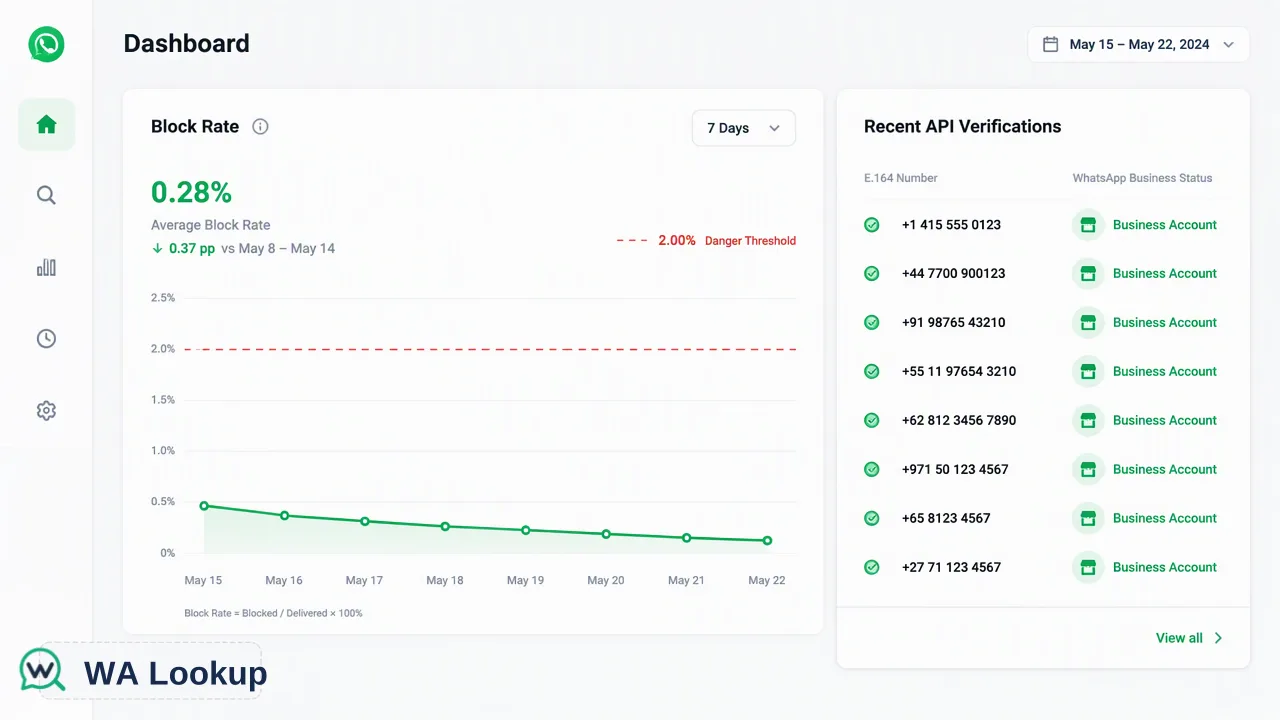
Scaling WhatsApp business communication requires moving away from high-risk cold messaging toward an inbound-first model supported by real-time registration verification.
Scaling WhatsApp communication requires moving away from cold, unsolicited messaging, which frequently triggers spam reports and platform blocks. Applying WhatsApp business outreach safety best practices means adopting an inbound-first framework where recipients initiate conversations through touchpoints such as website click-to-chat links and QR codes. Pairing this user-initiated model with real-time WhatsApp registration verification helps teams maintain clean contact directories, align messaging with platform account-presence signals, and support account health without triggering automated filtering thresholds.
The Risks of Cold WhatsApp Outreach
Unlike email or traditional SMS channels, WhatsApp operates primarily as a personal messaging application. Messages arrive directly on personal lock screens alongside updates from family and colleagues. Because of this personal environment, unsolicited messages from businesses are often perceived as intrusive disruptions. When recipients encounter unexpected outreach, their immediate reaction is frequently to block the number or tap the platform's native report button. High block rates—specifically rates climbing above 2%—serve as immediate negative health indicators for automated moderation systems. Once triggered, these systems can throttle messaging volume, impose temporary service suspensions, or permanently revoke account access. Furthermore, new sender numbers operate under heightened algorithmic scrutiny. Newly provisioned sender lines are fragile and require a deliberate warm-up period rather than immediate high-volume broadcast blasts. Subjecting an unseasoned business line to cold outreach campaigns significantly amplifies the probability of rapid platform restrictions.
Adopting an Inbound-First Approach
To scale communication without escalating account risk, organizations adopt an inbound-first communication model. This framework replaces cold outbound broadcasting with user-initiated touchpoints that clearly demonstrate customer intent. Key entry points include:
- Click-to-Chat Website Widgets: Directing site visitors to launch a WhatsApp chat session with pre-filled inquiry text. - Dynamic QR Codes: Placing physical or digital scannable codes on packaging, receipts, or marketing collateral to encourage customer-prompted conversations. - Opt-in Form Flows: Inviting users to opt into transactional updates, notifications, or support alerts through explicit web form checkboxes before initiating contact. Because the user sends the opening message, the outreach sequence begins with demonstrated consent. This dynamic drastically lowers recipient friction, keeps spam reporting near baseline levels, and supports sustainable communication growth across support and commercial operations.
Maintaining Data Hygiene with Real-Time Verification
Even within an inbound-oriented workflow, contact directories degrade over time as customer details shift, typo errors occur during form completion, or accounts close. Relying on outdated contact lists exposes communication pipelines to message delivery failures, which can negatively affect sender quality ratings. Maintaining database hygiene requires verifying that submitted phone numbers correspond to platform account-presence signals before triggering automated responses or follow-ups. A WhatsApp registration check provides a definitive platform-presence signal at check time. However, teams must interpret this signal accurately within data management policies:
- Account Presence, Not Identity: A registered check confirms that a phone number is registered on WhatsApp at the moment of lookup. Segmenting internal databases by account presence allows teams to filter out unregistered numbers, route alternative communication channels (such as email or standard SMS) appropriately, and reduce delivery errors that could degrade sender quality scores.
Operationalizing Verification in Your Workflow
Technical teams can integrate registration verification directly into CRM, lead intake, and support routing workflows using WA Lookup. Checks are executed synchronously, returning immediate account-presence data within the initiating request flow rather than requiring asynchronous webhooks or polling queues. When a customer submits a contact record in international E.164 format, backend services can query the single-number verification endpoint or handle grouped records through the synchronous batch endpoint (handling up to 100 identifiers per call). Three core check types support distinct data enrichment needs:
| Check Type | Parameter (service_type) |
Output Data Points |
|---|---|---|
| WhatsApp Checker | ws |
Returns identifier and platform registration boolean (registered). |
| WhatsApp Avatar Checker | ws_avatar |
Returns registration status plus avatar availability and public avatar URL. |
| WhatsApp Business Checker | ws_business |
Returns registration status and whether the account utilizes WhatsApp Business (business). |
| Incorporating these synchronous responses into backend ingestion pipelines ensures that contact records are verified before automated notification queues dispatch messages. For technical usage rules, per-user concurrency configurations, and timeout controls, teams should consult current API documentation. |
FAQ
Why does WhatsApp restrict accounts for unsolicited messaging?
WhatsApp prioritizes user privacy on personal lock screens. When recipients receive unsolicited inbound messages from unfamiliar senders, they frequently block the sender or report the conversation as spam. Automated platform filters monitor these signals, and maintaining a high block rate—often cited as exceeding 2%—routinely triggers automated account restrictions or temporary suspensions to maintain network safety.
How does a registration check differ from general phone validation?
General phone number validation typically confirms whether a number conforms to standard numerical formatting (such as E.164 rules) or whether a line is active on a telecommunications carrier network. In contrast, a WhatsApp registration check confirms whether that specific identifier is actively registered on the WhatsApp platform at check time. It provides a platform-specific account-presence signal rather than general telephone validity.
How does an inbound-first strategy support account stability?
An inbound-first model shifts the initial message interaction to the user. Because the customer initiates contact via interactive elements like web buttons or scannable codes, the interaction carries unambiguous consent. This sharply reduces recipient friction, mitigates block and spam reporting rates, and helps teams keep account metrics within acceptable platform thresholds.
Learn More
Choose the product information that fits the next step in your workflow.