
Product guidance
Reduce SMS Costs: Best Practices for Messaging Teams
Discover practical ways to reduce SMS costs and messaging spend using real-time platform checks, segmentation, and batch list verification.
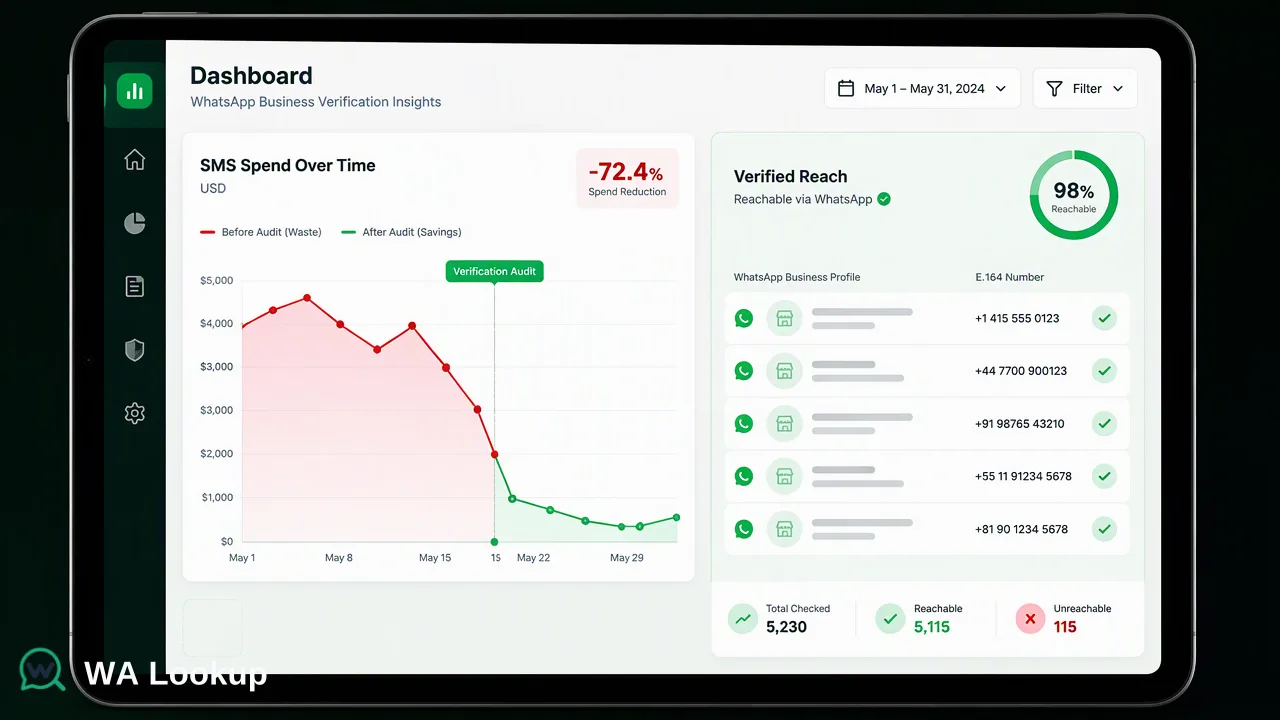
Learn proven best practices to reduce messaging spend by implementing real-time platform registration signals, audience segmentation, synchronous batch verification, and continuous data hygiene.
Implementing reduce SMS costs best practices begins with filtering unverified numbers before dispatching high-cost messages. Organizations waste messaging budgets when sending traffic to inactive, churned, or unreachable destinations. By integrating real-time platform registration signals into outbound workflows, teams can verify whether a destination number is registered and reachable on specific channels at check time. This verification allows operations teams to prune invalid records, route traffic intelligently, and focus outbound spend exclusively on verifiable, reachable destinations.
Prioritize Real-Time Verification Over Historical Contact Data
A primary driver of unnecessary messaging expenditure is reliance on stale contact databases. Phone numbers churn frequently as users change carriers, switch plans, or deactivate accounts. When teams rely on static contact data collected months or years prior, a significant portion of outbound SMS traffic targets invalid or dormant numbers. Applying real-time verification before sending helps teams identify which numbers maintain platform account presence. WA Lookup provides synchronous REST API checks that return an account-presence signal in the same HTTP response as the check request. Querying destination numbers formatted in standard E.164 syntax provides immediate confirmation of whether an account is currently registered. Integrating this check into outbound pipelines helps organizations suppress unreachable records before incurring dispatch fees.
Implement Platform-Specific Audience Segmentation
Not all contacts should receive identical messaging workflows. One of the most effective strategies to control messaging budgets is segmenting recipient lists based on platform-specific account signals. By identifying which contacts are reachable on alternate messaging channels, teams can optimize routing and reduce SMS costs best practices across communication channels. WA Lookup supports three distinct check types via the service_type parameter in check requests:
ws Check
The standard ws check queries basic WhatsApp registration. The response data object returns the identifier and a boolean registered signal. This basic reachability signal provides teams with baseline confirmation of account presence at check time, allowing systems to prioritize platform delivery over traditional SMS. ### ws_avatar Check
The ws_avatar check returns the base registration status alongside avatar presence and an optional avatar_url. This enriched profile context helps CRM and operations teams evaluate whether a record has public profile metadata, informing internal lead triage and routing decisions. ### ws_business Check
The ws_business check verifies registration while identifying whether the number is associated with a WhatsApp Business profile. This signal allows organizations to differentiate commercial contacts from standard consumers, directing business inquiries to specialized communication flows.
Streamline Outreach with Synchronous Batch Processing
High-volume messaging operations require verification workflows that scale alongside contact databases. Processing numbers strictly one by one can introduce architectural complexity when preparing scheduled campaigns or recurring list updates. To accommodate list-level preparation, synchronous batch verification allows teams to submit up to 100 E.164 identifiers in a single request. Unlike asynchronous systems that rely on task submission, database polling, webhook callbacks, or separate file downloads, the batch endpoint processes the submission synchronously and returns the complete result set in the initiating HTTP response. If a batch cannot be decided, it fails as a whole, providing predictable error handling. This streamlined workflow allows engineering teams to validate entire segments immediately before dispatching campaigns, ensuring unverified records are removed without adding latency to campaign orchestration.
Maintain Data Hygiene Through Regular Audits and Dashboards
Controlling outbound spend is an ongoing governance practice rather than a one-time clean-up task. Databases naturally gather unreachable records over time, making periodic list audits essential for consistent budget management. Teams using WA Lookup can manage verification operations through both automated API integration and the SaaS web dashboard. The web interface supports API key administration, balance spend monitoring, recent check logs, product-level reporting, and 7-day usage trends. Tracking these metrics helps technical leads monitor verification patterns, observe registration rates across customer cohorts, and identify high-decay segments before scheduling costly broadcasts. Establishing a recurring schedule to audit lists against real-time account-presence signals helps organizations sustain low waste margins and preserve messaging budgets.
FAQ
How does checking platform registration status help reduce messaging costs?
By verifying that a submitted phone number is registered before dispatching a message, organizations can filter out unregistered or invalid destinations. This helps teams avoid paying carrier fees on numbers that cannot receive the outreach.
Why is synchronous verification preferred for cost-sensitive dispatch workflows?
Synchronous verification returns results in the initiating HTTP response without requiring asynchronous task queues, polling, or webhook callbacks. This direct response allows routing pipelines to make real-time decisions, filtering unverified numbers immediately prior to dispatch.
How does synchronous batch verification support large-scale messaging lists?
Synchronous batch endpoints accept up to 100 E.164 identifiers in a single request, returning results for the entire batch in the same HTTP response. This enables teams to audit outbound recipient lists efficiently before launching outreach, reducing integration overhead and simplifying data hygiene pipelines.
Learn More
Choose the product information that fits the next step in your workflow.