
Product guidance
The Hidden Cost of 'Smart' Devices: Why Your Data Integrity Matters More Than Ever
Unmonitored background tasks drain budgets. Discover how data verification and account-presence checks support efficient messaging infrastructure.
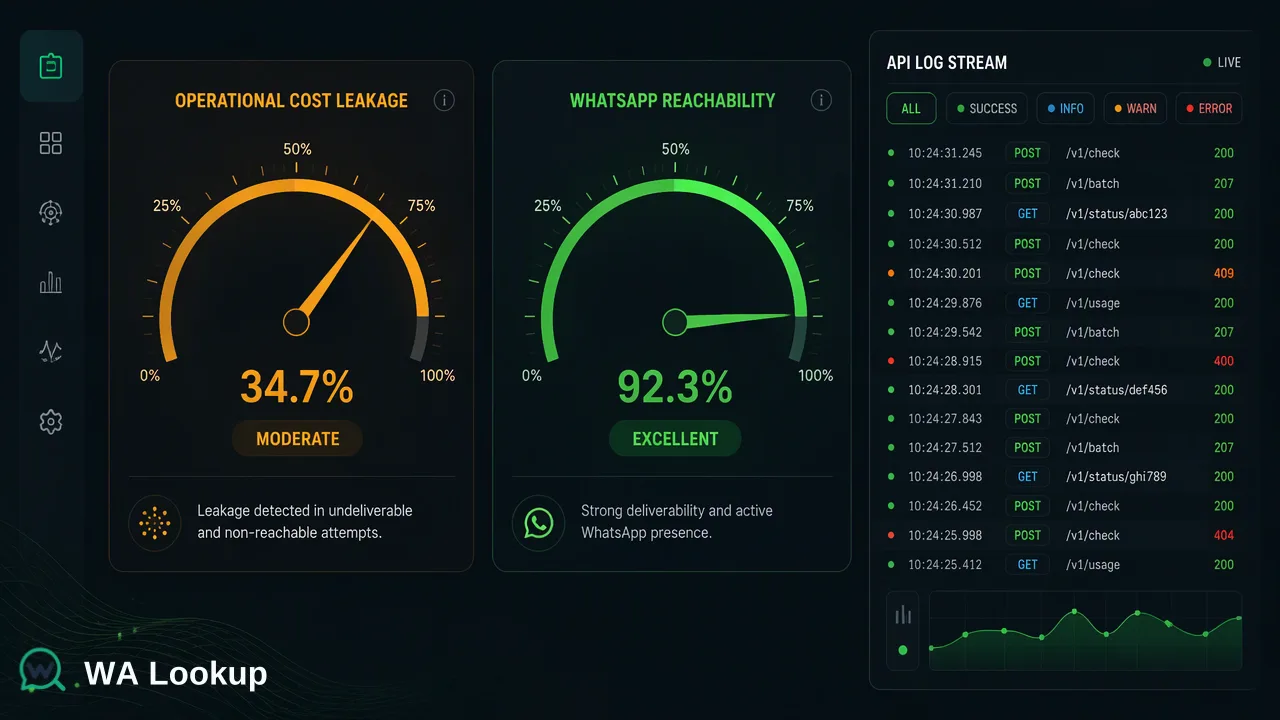
An unmonitored smart device consuming 1TB of data highlights the operational risks of automated systems. Learn how a verify-first data verification workflow protects messaging budgets from runaway resource consumption.
The recent viral incident of a household coffee maker transmitting a terabyte of data over ten days demonstrates the operational danger of unmonitored automation. In enterprise environments, unverified contact databases create an identical vulnerability: background messaging pipelines and automated campaigns quietly consume server capacity, gateway fees, and team effort on invalid destinations. Adopting a verify-first data verification workflow helps teams filter unreachable inputs prior to dispatch, maintaining infrastructure efficiency across outbound communications.
The Hidden Cost of 'Set and Forget' Automation
A viral technical report recently drew widespread attention when an IT professional discovered that an automated smart coffee machine in his parents' residence generated 1TB of network data within a 10-day span. While the bulk of the traffic remained confined to the local wireless setup rather than public transit, the sheer volume saturated network access points and degraded overall bandwidth. The root cause was an unmonitored software loop running silently without diagnostic alarms or bandwidth thresholds.
This domestic incident mirrors a persistent dilemma inside enterprise operational architecture. Modern digital operations rely extensively on scheduled background jobs, webhook triggers, and automated batch scripts. When engineering teams deploy these mechanisms under a 'set and forget' assumption, internal tracking often monitors whether a script executed, rather than whether the work yielded productive utility. Without continuous oversight, automated routines continue cycling computing power, bandwidth, and third-party call volume on stale records.
From IoT Bugs to Communication Leakage
The operational dynamics of runaway IoT hardware apply directly to automated messaging infrastructure. When customer relationship platforms or marketing tools initiate high-volume outreach across WhatsApp or SMS channels, the underlying systems expend identical computational overhead for every single record in the queue. Every payload formatted, queued, and transmitted represents server cycles and paid vendor transactions.
When databases suffer from contact decay, invalid formatting, or deactivated numbers, systems broadcast traffic into dead ends. Much like the smart appliance saturating a local router with unmonitored traffic, uninspected outbound pipelines produce silent cost leakage. The organization absorbs network bandwidth costs, API consumption charges, and queue congestion without generating meaningful business contact. High-performing engineering teams counter this degradation by integrating data verification directly into pipeline ingestion, screening records before downstream systems initiate dispatch.
Implementing a Verify-First Workflow
Establishing an efficient messaging infrastructure requires shifting from post-dispatch error handling to an upstream validation model. Within this architecture, data verification acts as an automated triage mechanism. Solutions such as WA Lookup provide the operational control layer for teams managing WhatsApp communication streams, offering synchronous verification alongside batch file processing on a unified account balance.
Teams can structure their data verification workflows around two distinct operational patterns depending on ingestion timing:
Synchronous Point-of-Capture Checks: During account registration, lead capture, or transactional event triggers, real-time single checks assess an individual number. The system returns the registration signal directly in the initiating response, allowing applications to validate routing logic instantly.
Asynchronous Bulk Processing: When preparing large database refreshes or scheduled campaigns, asynchronous bulk tasks accept dedicated TXT or CSV files. The API returns a task reference upon initial upload, and the final results become accessible via a downloadable result file once background verification concludes.
Integrating these checks prior to queue execution ensures downstream distribution systems only commit processing resources toward verified accounts.
Maintaining Operational Efficiency
Preserving clean data pipelines is a continuous operational discipline rather than an isolated audit event. Phone number registrations shift over time as users abandon numbers, switch telecommunication providers, or migrate platforms. Regularly refreshing data inputs helps organizations maintain lean communication pipelines and protect infrastructure budgets from runaway automated tasks.
When integrating platform-registration checks, system architects must interpret the resulting data points within their defined technical scope. By treating registration signals as one valuable reachability metric alongside internal consent registries and CRM activity data, technical organizations establish resilient, cost-effective messaging architectures.
FAQ
How does data verification support resource efficiency in automated messaging?
Data verification acts as an automated audit layer before campaigns trigger. By validating destination inputs against account-presence records, systems route outbound requests exclusively to reachable endpoints. This workflow helps teams avoid unnecessary processing overhead and reduces message dispatch fees directed at defunct records.
What is the difference between real-time and bulk verification workflows?
Real-time verification evaluates single numbers or small batches synchronously, returning account-presence data directly within the initiating API response. Asynchronous bulk tasks process large, single-country files in the background, issuing a task reference at submission and producing a downloadable result file once completion finishes.
What does a platform-registration signal represent in technical workflows?
A platform-registration signal reflects whether an identifier is registered on the service at check time. Engineering and marketing teams treat this output as a baseline reachability indicator to optimize pipeline queuing, rather than an inference of subscriber identity, active engagement, or message receipt.
Learn More
Choose the product information that fits the next step in your workflow.