
Product guidance
Are Your IoT Devices Silent Data Vampires? How to Audit Your Network Footprint
Unmonitored IoT devices and stale contact lists drain critical resources. Learn how structured data usage audits restore operational visibility.
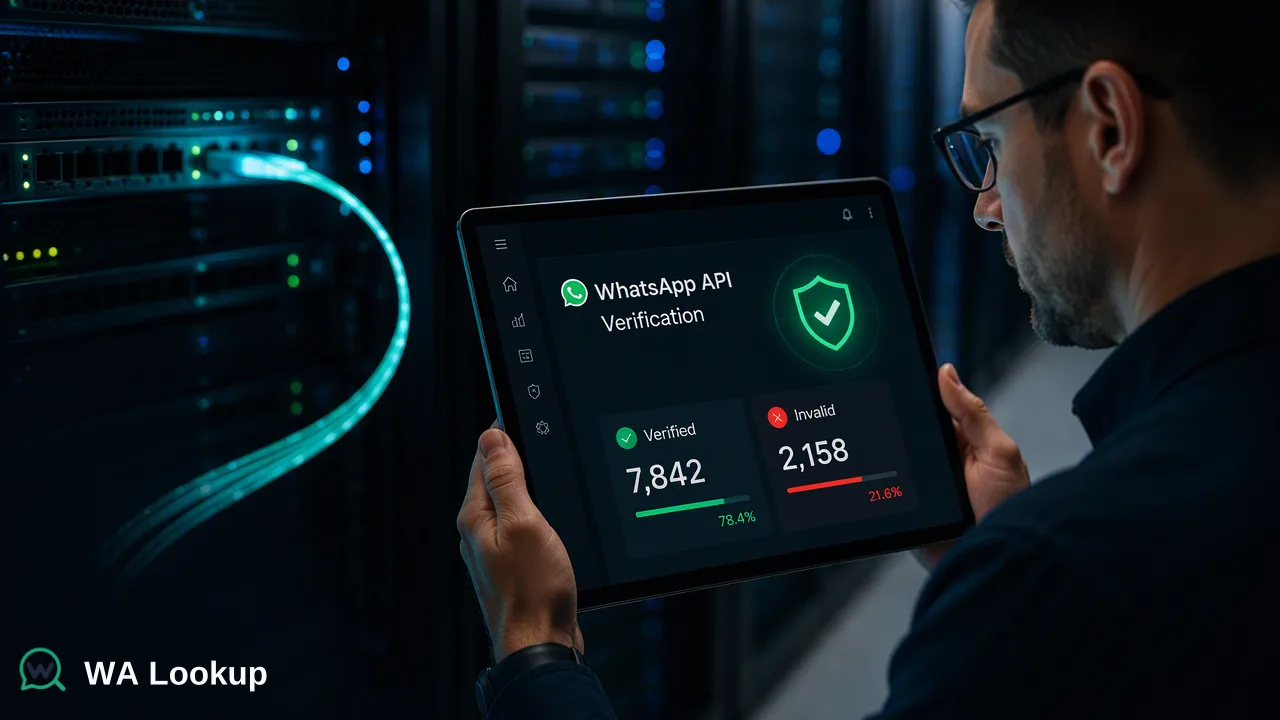
Unmonitored systems silently drain bandwidth and operational budgets. Learn how conducting a regular data usage audit restores visibility across network infrastructure and contact workflows.
The discovery of an automated home coffee maker transmitting one terabyte of traffic over ten days demonstrates how unmonitored endpoints quietly exhaust critical operational resources. Whether dealing with a misconfigured connected appliance flooding local access points or unverified messaging queues running against inactive records, unchecked operations introduce hidden overhead. Conducting a structured data usage audit provides organizations with the necessary visibility to detect misallocations, evaluate reachability signals, and establish baseline discipline across technical workflows.
The Silent Cost of Unmonitored Systems
A viral technical report detailed an IT specialist discovering that his parents' internet-connected coffee machine had broadcasted roughly one terabyte of data across a ten-day span. While the generated volume saturated their local wireless access point rather than routing externally across the public internet, the incident revealed an essential operational reality: connected systems left without diagnostic oversight consume resources silently.
This coffee maker anomaly exemplifies the classic black-box problem. When hardware appliances or automated software scripts run on default background configurations, operators often remain oblivious to their consumption until performance degrades or billing invoices arrive. Proactive network traffic auditing transforms background activity into measurable telemetry, allowing system administrators to identify runaway processes before operational disruption occurs.
Connecting Bandwidth Saturation to Contact Database Decay
The mechanics governing physical bandwidth saturation mirror the inefficiencies present in unmanaged commercial contact databases. Organizations routinely maintain large customer relationship management (CRM) repositories filled with legacy telephone records, assumed to be operational simply because they exist in storage.
Running automated communication campaigns against unchecked databases mirrors keeping a rogue connected appliance permanently running on a primary router. Telecommunications providers charge for message dispatches regardless of whether the destination endpoint is valid, active, or disconnected. In addition, privacy frameworks such as Article 5(1)(c) of the EU General Data Protection Regulation emphasize data minimisation, requiring personal records to remain adequate, relevant, and limited to operational necessity.
Executing a systematic data usage audit across marketing and operational databases reveals invalid records, stale customer phone numbers, and outdated endpoints. Auditing transforms stale databases into lean assets, shielding operational budgets from persistent, unseen depletion.
Restoring Visibility Through Registration Verification Audits
Addressing invisible pipeline consumption requires verifiable diagnostic checkpoints. For customer engagement teams utilizing messaging channels, verification platforms supply the requisite audit layer.
WA Lookup delivers account-presence verification through a centralized SaaS web dashboard alongside a programmatic REST API. Instead of blind dispatching, engineering and operations teams can audit individual identifiers before execution:
- Single-Identifier Realtime Verification: The platform evaluates standard international E.164 phone numbers using synchronous endpoints, returning platform registration results in the immediate response.
- Profile and Business Account Checks: Dedicated inspection options supply additional context by observing public avatar availability or distinguishing standard accounts from business accounts.
- Asynchronous Bulk Processing: When auditing legacy databases containing thousands of entries, teams can submit single-country CSV or TXT files to process list-wide reachability audits and retrieve structured result files.
| Verification Service | Primary Capability | Primary Input Format |
|---|---|---|
WhatsApp Registration (ws) |
Confirms account presence at check time | E.164 Phone Number |
WhatsApp Avatar (ws_avatar) |
Evaluates registration and public avatar presence | E.164 Phone Number |
WhatsApp Business (ws_business) |
Observes registration and business account status | E.164 Phone Number |
Incorporating these platform-registration signals enables technical teams to prune disconnected records from active transmission queues. Current pricing details and concurrency controls remain documented in the official API documentation.
Establishing a Culture of Continuous Operational Auditing
Curbing silent resource consumption demands consistent auditing protocols across all operational layers, from hardware infrastructure to commercial databases.
Organizations benefit from establishing scheduled review cycles. For local hardware, this entails checking router traffic logs, segmenting connected consumer electronics onto dedicated virtual networks, and decommissioning malfunctioning appliances. For communication infrastructure, maintaining hygiene involves validating opt-in records under official messaging policies such as the WhatsApp Business Messaging Policy, validating recipient lists before scheduled broadcasts, and archiving unreachable entries.
Treating auditability as an ongoing practice keeps technical teams ahead of configuration drift, resource saturation, and avoidable operational expenditure.
FAQ
Why is auditing contact records critical for cost control?
Contact databases naturally degrade as individuals change numbers or abandon accounts over time. Sending outbound campaigns to unchecked databases consumes platform credits and messaging spend on destinations that fail to connect. Regular list audits identify invalid numbers beforehand, helping operations teams allocate outbound expenditure solely toward verified platform destinations.
What information does a platform-registration check provide?
A platform-registration check returns an account-presence signal indicating whether a specific phone number is registered on WhatsApp at the query timestamp. This observation serves as an input for routing and filtering workflows. It functions strictly as a reachability signal at check time rather than proof of identity, legal company status, or verified delivery.
How can teams audit high-volume contact repositories?
Teams handling extensive phone directories can execute asynchronous bulk verification tasks through tools like WA Lookup. Operators upload structured CSV or TXT files organized by country code to evaluate account presence at scale, subsequently downloading processed results to update central database records.
Learn More
Choose the product information that fits the next step in your workflow.