
Product guidance
The 1TB Coffee Machine: Why Your IoT Audit Strategy Needs to Include Phone Numbers
Learn how unmonitored endpoints drain resources, using the 1TB coffee machine bug as a lesson to maintain data integrity across automated messaging pipelines.
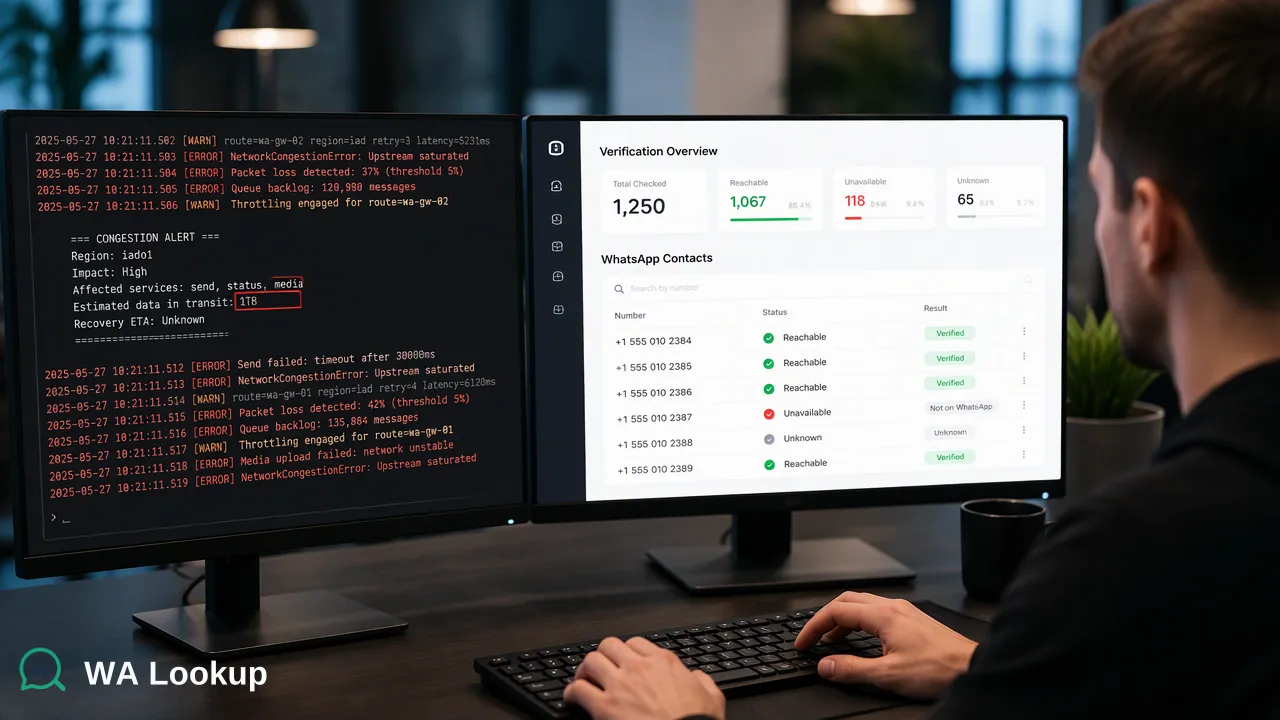
An unmonitored smart coffee machine consumed 1TB of data in ten days, highlighting the hidden cost of unchecked automation. Applying operational data integrity audits to communication endpoints helps organizations eliminate wasted spend on inactive contact lists.
Automated workflows operating without recurring audit layers inevitably squander resources on unreachable endpoints. When an unchecked device or process broadcasts continuously into a void, it saturates internal infrastructure and inflates operating budgets. Establishing routine data integrity checks—such as verifying phone numbers before initiating WhatsApp messaging workflows—ensures outbound pipelines direct traffic only toward registered destinations, preserving technical bandwidth and campaign capital.
The Silent Drain: Lessons from a 1TB Coffee Machine
A recent technology incident demonstrated how quietly automated systems can consume resources when operational oversight lapses. An IT specialist monitoring his parents' domestic network noticed severe access point saturation and traced the anomaly to an unexpected source: an internet-connected smart coffee maker. Over just ten days, a firmware malfunction caused the countertop appliance to broadcast approximately one terabyte of internal network traffic, flooding the local access point before anyone recognized the issue.
While the traffic remained largely within the local network rather than traversing the external internet, the incident exposed a universal failure pattern in automated environments. Automated hardware and software processes execute their programmed routines continuously. Without proactive monitoring, an automated loop will consume memory, bandwidth, and computational budgets indefinitely on unproductive actions.
Organizations frequently experience an identical silent drain across digital communication channels. Systems programmed to broadcast notices, transactional alerts, or outreach campaigns often fire continuously against historical phone lists without checking whether the destination endpoints remain viable.
Applying Audit Rigor to Communication Workflows
Treating automated messaging as a self-sustaining pipeline often leads to decaying contact tables. Phone numbers churn rapidly as individuals change providers, surrender prepaid SIM cards, or reassign lines.
Maintaining strict data integrity across communication pipelines requires the same diagnostic checkpoints network engineers apply to connected devices. Incorporating structured phone number validation ensures records adhere to telecommunication standards, beginning with formatting established by ITU-T Recommendation E.164, which governs international numbering plans up to 15 digits.
Regulatory and platform governance frameworks reinforce this hygiene practice. Senders must align with the WhatsApp Business Messaging Policy, which requires prior opt-in permission before messaging users. Furthermore, applying data minimization under GDPR Article 5 (Regulation (EU) 2016/679) ensures businesses retain and process only data adequate, relevant, and necessary for operational purposes.
The Audit Layer: Verifying WhatsApp Endpoints
To resolve communication waste, technical teams deploy verification platforms such as WA Lookup as an audit layer within outbound pipelines. Through a unified account balance, WA Lookup provides synchronous realtime checks alongside asynchronous bulk processing tools to identify valid WhatsApp endpoints prior to campaign execution.
Realtime checks evaluate submitted numbers instantly, returning complete payload data within the initiating request. This synchronous mechanism suits programmatic integration into sign-up forms, transactional queues, and live CRM updates.
Available Verification Checks
WhatsApp Registration Check (
ws): Evaluates a submitted phone number to confirm active platform registration at the moment of inspection.WhatsApp Avatar Check (
ws_avatar): Returns the core registration signal alongside avatar availability status and corresponding profile image URL data.WhatsApp Business Account Check (
ws_business): Confirms account registration while identifying whether the profile operates as an official WhatsApp Business account.
| Service Type | Signal Returned | Ideal Workflow Stage |
|---|---|---|
ws |
Account presence | Lead intake, CRM scrubbing |
ws_avatar |
Account presence, avatar flag, URL | Profile enrichment, inbound routing |
ws_business |
Account presence, business flag | B2B segmentation, vendor validation |
For enterprise datasets and historical audits far exceeding realtime request boundaries, teams leverage asynchronous bulk file tasks. Users upload single-country CSV or TXT lists to generate background batch jobs, downloading completed result sets upon final processing.
Building a Sustainable Automation Strategy
Transforming automation from an uncontrolled resource drain into a resilient asset requires clear boundaries and scheduled list maintenance. Rather than assuming perpetual connectivity, engineering teams should establish structured validation cadences before each major communication dispatch.
Technical leads must interpret verification data correctly. Operational systems should treat registration data as a filtering signal that informs routing decisions alongside permission logs and compliance checks.
By auditing endpoints before scheduling outbound workflows, organizations eliminate dead endpoints from their pipelines, preserve infrastructure resources, and maintain high standards of data integrity across their communication ecosystem.
FAQ
Why should organizations audit phone numbers before initiating campaigns?
Routine endpoint verification preserves data integrity by identifying unreachable numbers prior to transmission. Filtering records against platform registration signals helps engineering and marketing teams allocate operational resources exclusively to valid recipients, reducing unnecessary downstream execution costs.
How does an account-presence signal support delivery planning?
An account-presence signal provides check-time verification of whether a submitted phone number maintains an account on the WhatsApp platform. This metric informs list hygiene and contact routing, though recipient consent, device status, and final message receipt remain independent variables.
How do synchronous checks differ from bulk file tasks?
Synchronous single and batch API requests process up to 100 records and return account attributes directly in the initial response. In contrast, asynchronous bulk tasks accept dedicated single-country files for background processing, returning an identifier that yields a downloadable result file once completed.
Learn More
Choose the product information that fits the next step in your workflow.